


Many small business owners assume attackers aren't interested in them. In reality, smaller businesses are often easier targets precisely because they have fewer protections. Most attacks aren't sophisticated. They rely on a weak password, an outdated plugin, or someone clicking the wrong link.
The good news is that a handful of basics stops most of them.
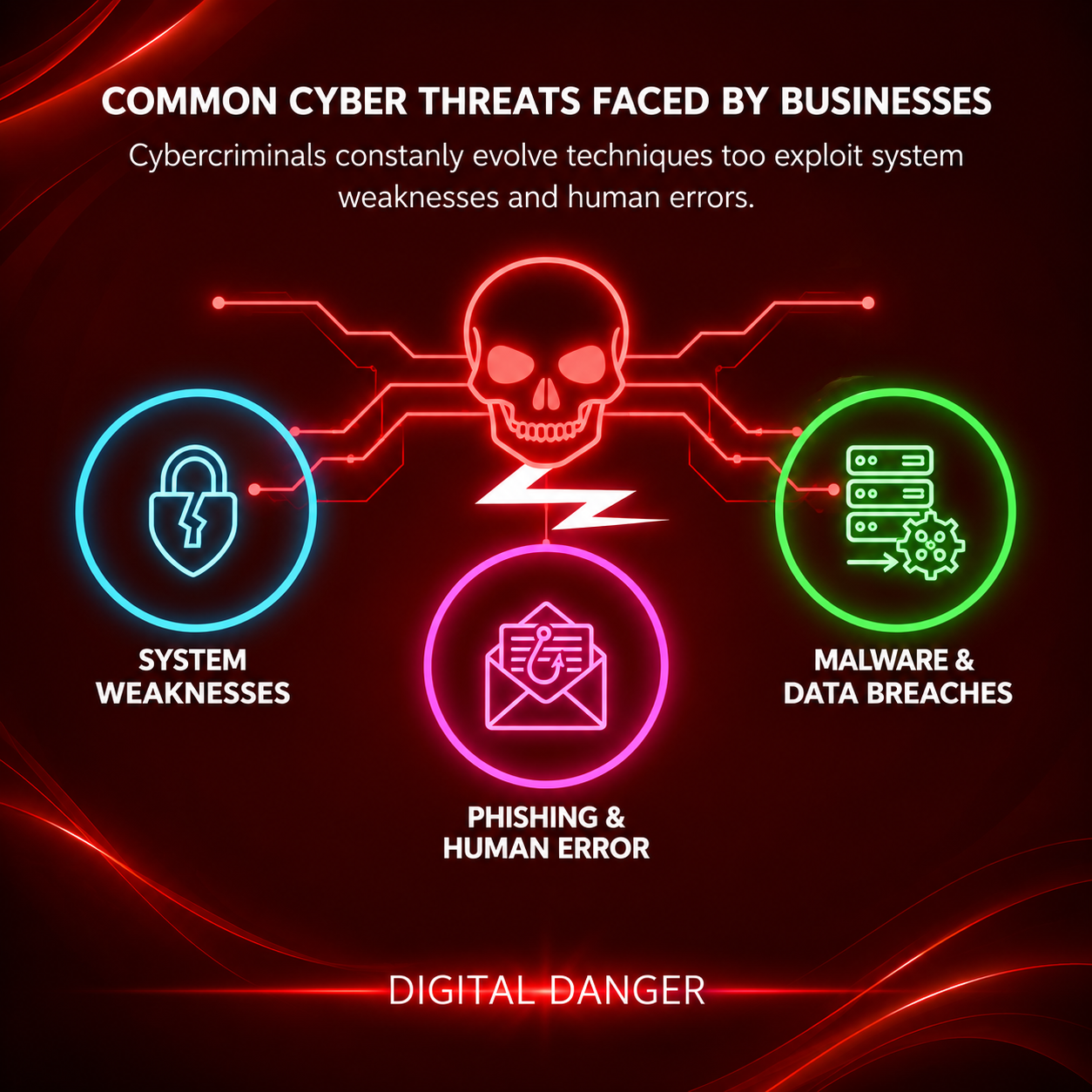
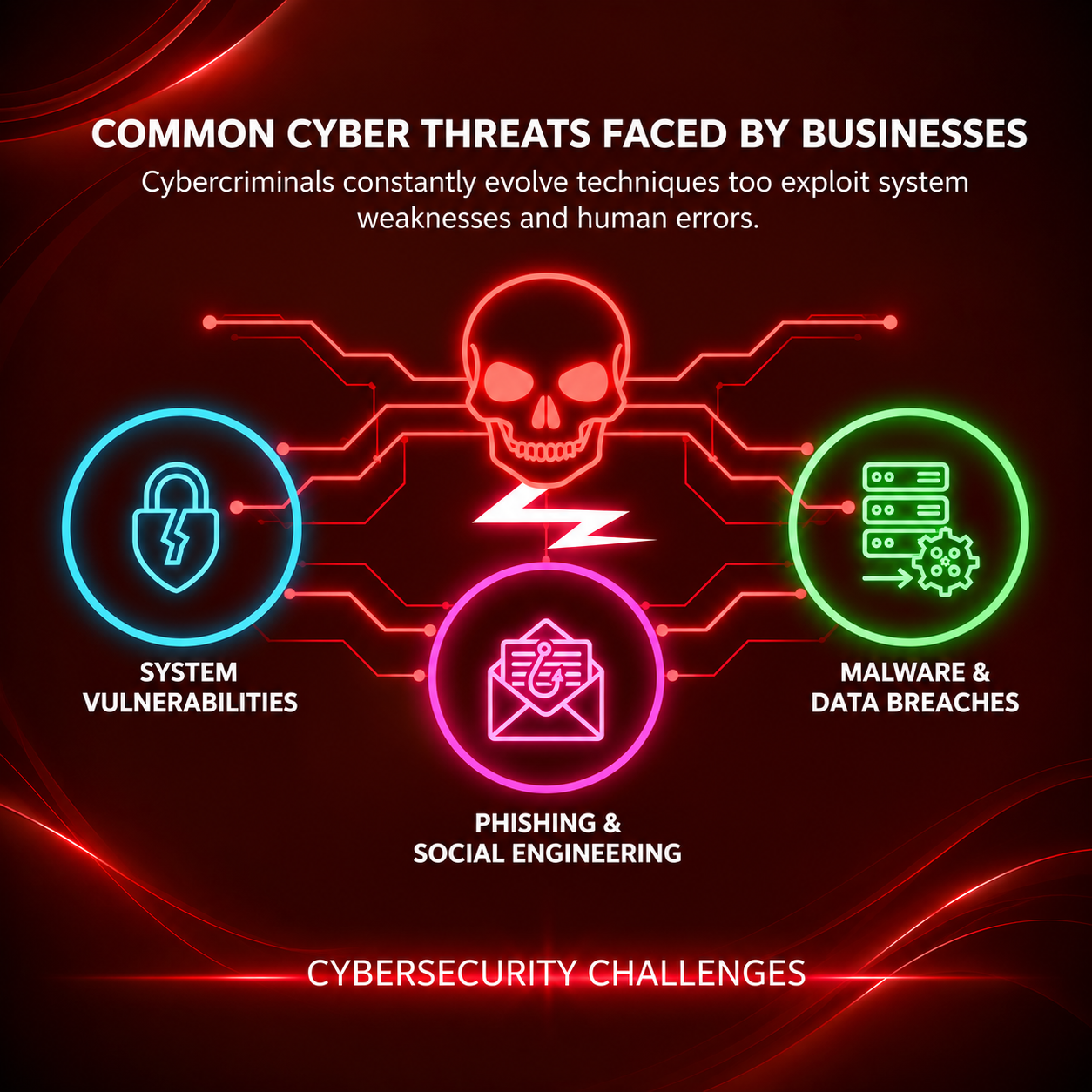
Common threats
- Phishing. Fake emails or WhatsApp messages that look like they're from a bank, supplier or courier, asking someone to click a link or share an OTP.
- Ransomware. Software that locks your files and demands payment to unlock them.
- Hacked websites. Usually through an outdated WordPress plugin or theme, leading to spam pages, redirects or a Google warning on your site.
- Stolen passwords. The same password reused across email, banking and your website admin.
- Inside mistakes. Shared logins, ex-employees who still have access, files sent to the wrong person.
The basics every business should have
- Two-factor login on email, banking, domain and hosting accounts
- A password manager, so every account has its own strong password
- Automatic updates for computers, phones, and your website's software and plugins
- Backups kept separately from the main system, and tested
- SSL on your website (the padlock in the browser), which should be free and standard
- Separate accounts for each staff member, removed the day someone leaves
When you need professional help
If you handle payments, health records, student data or customer documents, or you run custom software, a proper security review is worth it. That usually means checking your website and server for known weaknesses, reviewing who has access to what, setting up a firewall and monitoring, and agreeing a plan for what to do if something goes wrong.
“A secure business is a successful business.” ~ Zoya Khanam
Who gets targeted most
Online stores (payment and customer data), clinics and hospitals (patient records), schools and coaching institutes (student data and fee payments), and any business whose website hasn't been updated in years. Attackers rarely pick a business by name. They scan the internet for anything vulnerable and go after whatever they find.

Where to start this week
Turn on two-factor login for your email and your domain account. Check when your website was last updated. Find out where your backups are and whether anyone has ever restored one. Those three steps take an afternoon and close the most common gaps. Everything else can be planned from there.
