


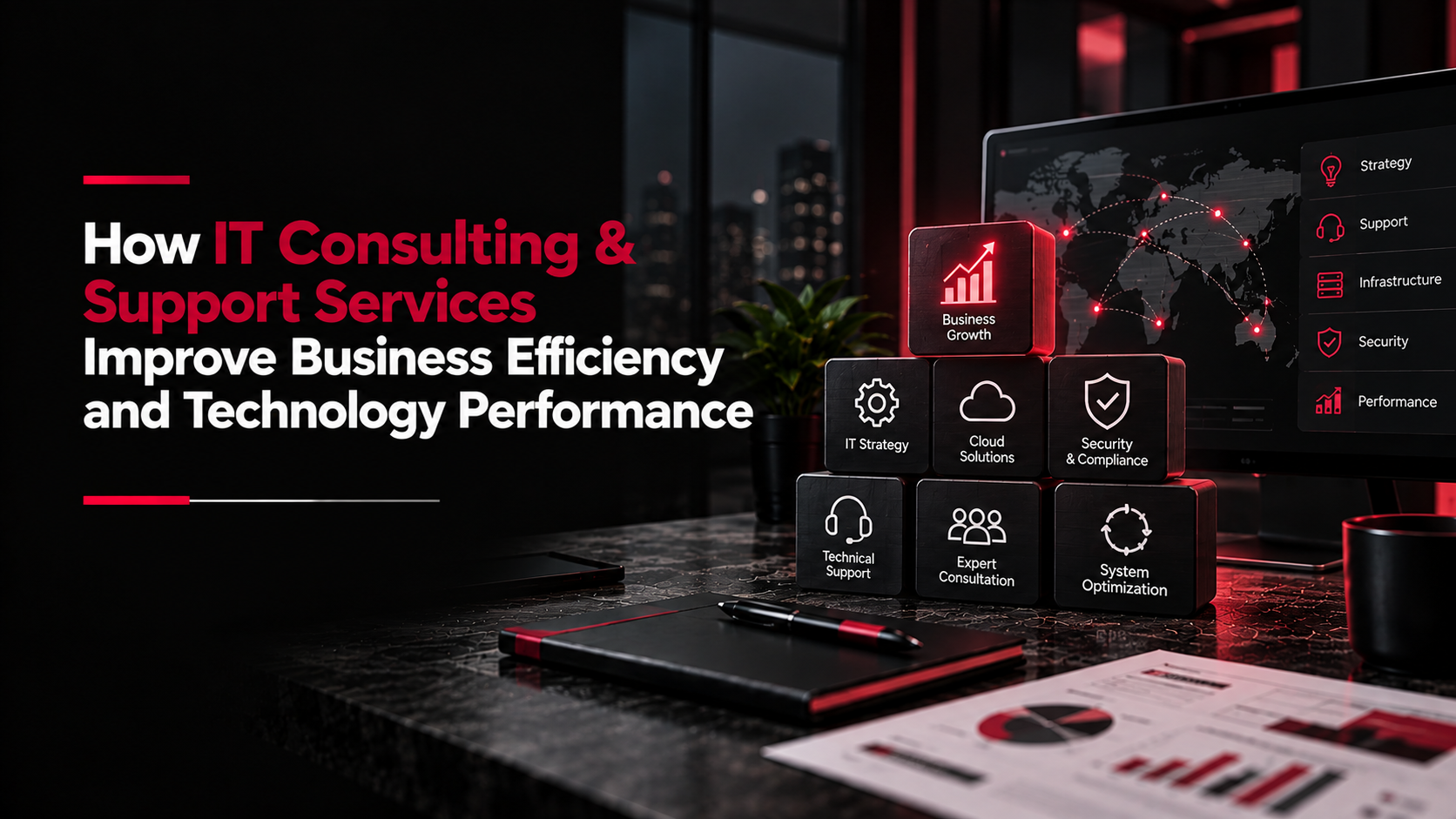
Most small businesses don't have an IT department. They have the one person in the office who is "good with computers", a website someone built a few years ago, and a growing list of tools that don't talk to each other. That works until it doesn't, usually at the worst possible moment.
IT consulting and support simply means bringing in people whose job is to get that technology working properly, and keep it that way.
Signs you need outside help
- You pay for software subscriptions nobody is sure you still use
- Staff copy data between Excel, Tally and WhatsApp by hand every day
- Your website or email goes down and nobody knows who to call
- You are about to buy expensive software and aren't sure it fits
- Backups exist "somewhere", but nobody has ever tried restoring one
What IT support usually covers
- Helpdesk support for day-to-day problems with computers, email and software
- Network and Wi-Fi setup, so the office isn't fighting its internet connection
- Email and cloud setup, such as Google Workspace or Microsoft 365, with a proper account for each person
- Backups and recovery, tested so you know they actually work
- Security basics: updates, antivirus, strong passwords and two-factor login
- Website and server monitoring, with alerts before customers notice a problem
What consulting adds
Support keeps things running. Consulting is about deciding what you should be running in the first place. A good consultant will:
- Map how work actually flows through your business, and where time gets lost
- Recommend tools that fit your size and budget, not the most expensive option
- Plan changes in stages, so you are never without a working system
- Tell you when something you already have is good enough
“Smart technology decisions lead to smarter business outcomes.” ~ Harshit Rana
Where it helps most
The biggest gains usually come in businesses with a lot of repeat paperwork: manufacturers and traders managing orders and stock, schools and coaching centres handling admissions and fees, clinics managing appointments and records, and shops juggling online and offline sales.

Getting value without overspending
Start with an audit rather than a long contract. A short review of your systems, costs and daily headaches shows where the quick wins are. Cancelling one unused subscription or automating one daily task often covers the cost of the review on its own. From there, you can decide whether you need ongoing support, a one-off project, or just a number to call when something breaks.
